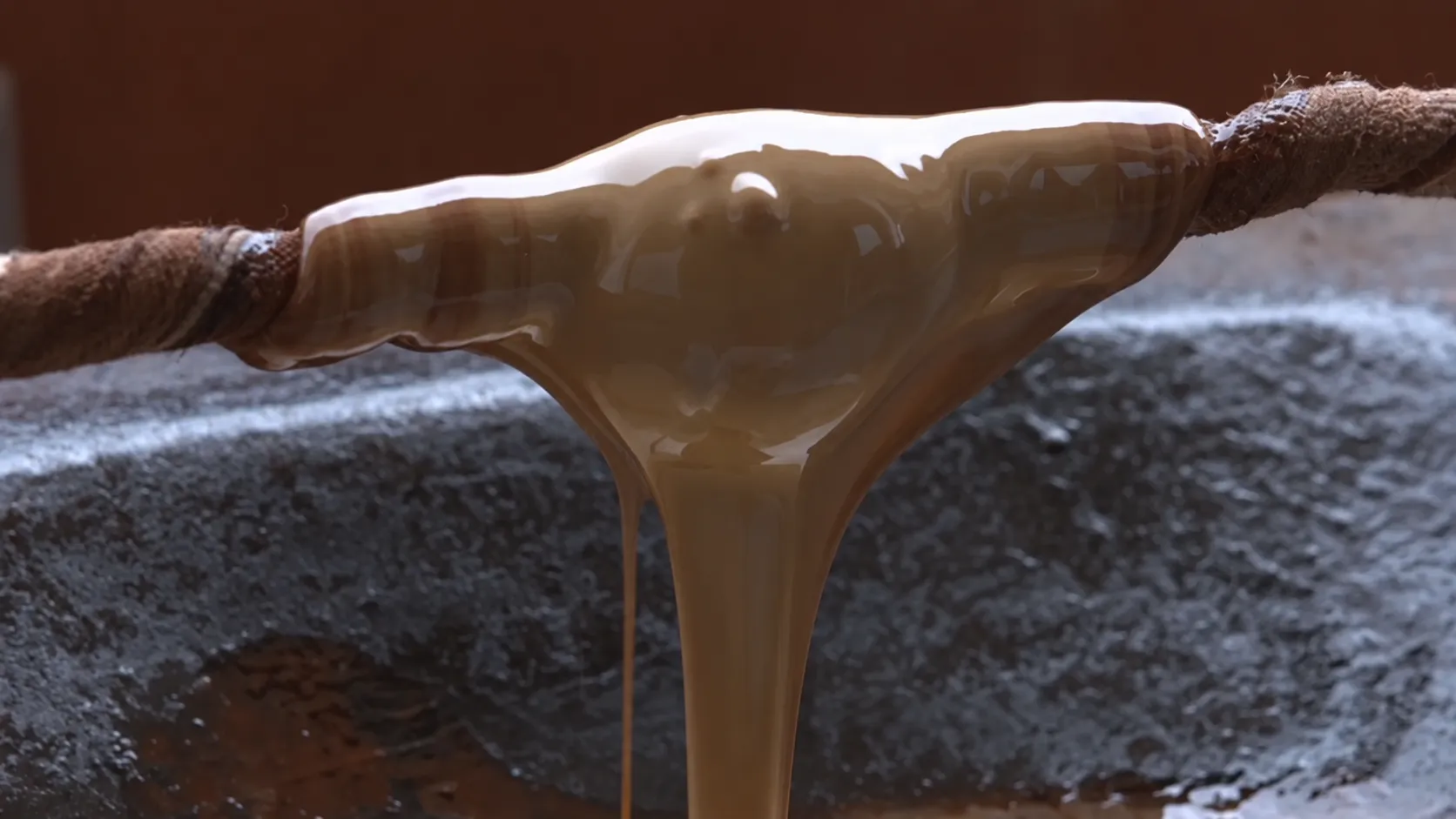
Lacquer
Natural lacquer acts as a binding and coating material. Layering and finishing contribute to the sculpture’s surface.
The Craft
Dry-lacquer sculpture brings lacquer, textile and a supporting form together. Its construction becomes clearer when we look beneath the surface.
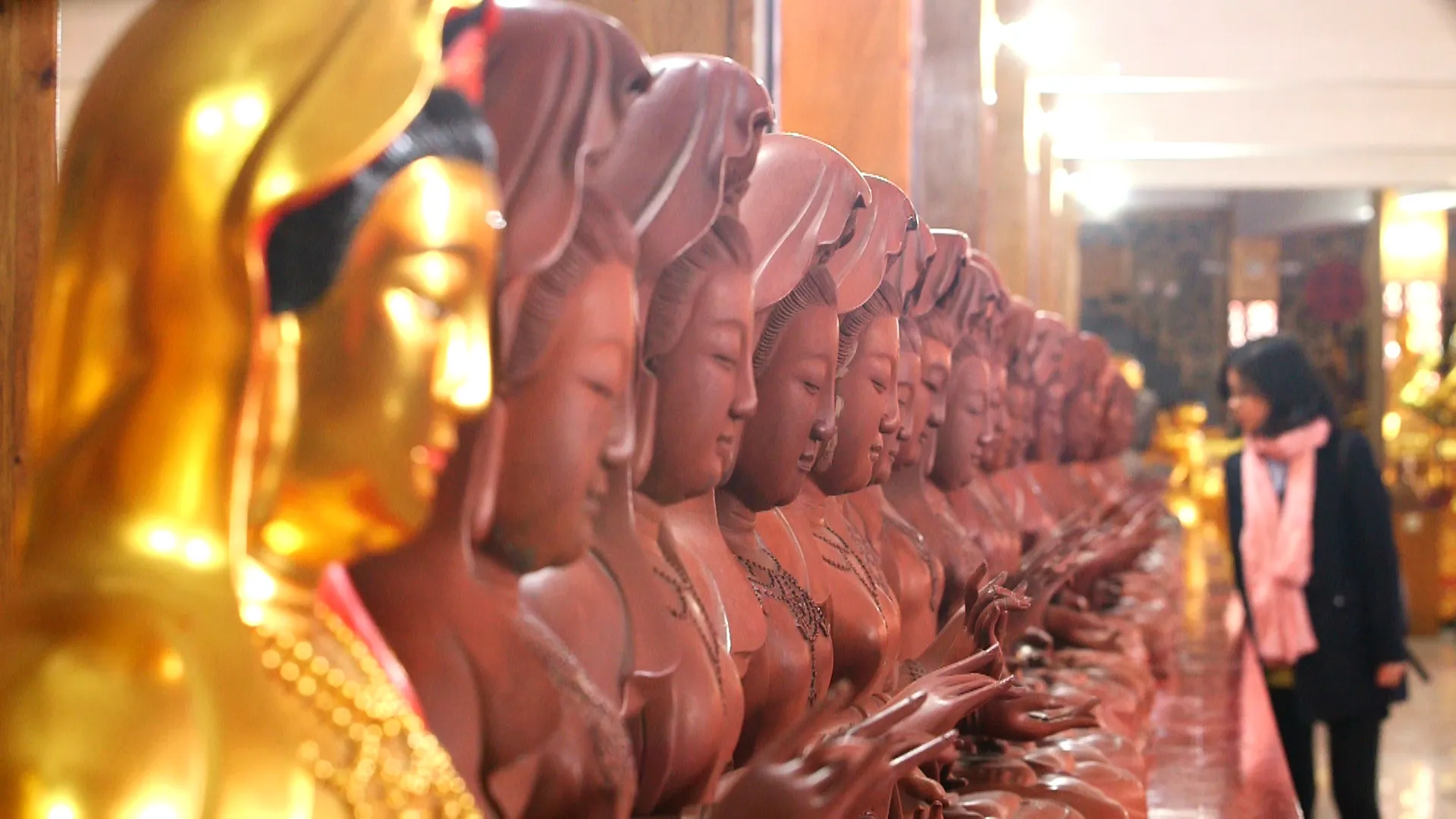
A wooden core can remain inside a figure. A removable model can instead leave a hollow body of cloth and lacquer. Internal braces may also survive in a hollow work.
Technical examination of early Chinese sculpture ↗Natural lacquer acts as a binding and coating material. Layering and finishing contribute to the sculpture’s surface.
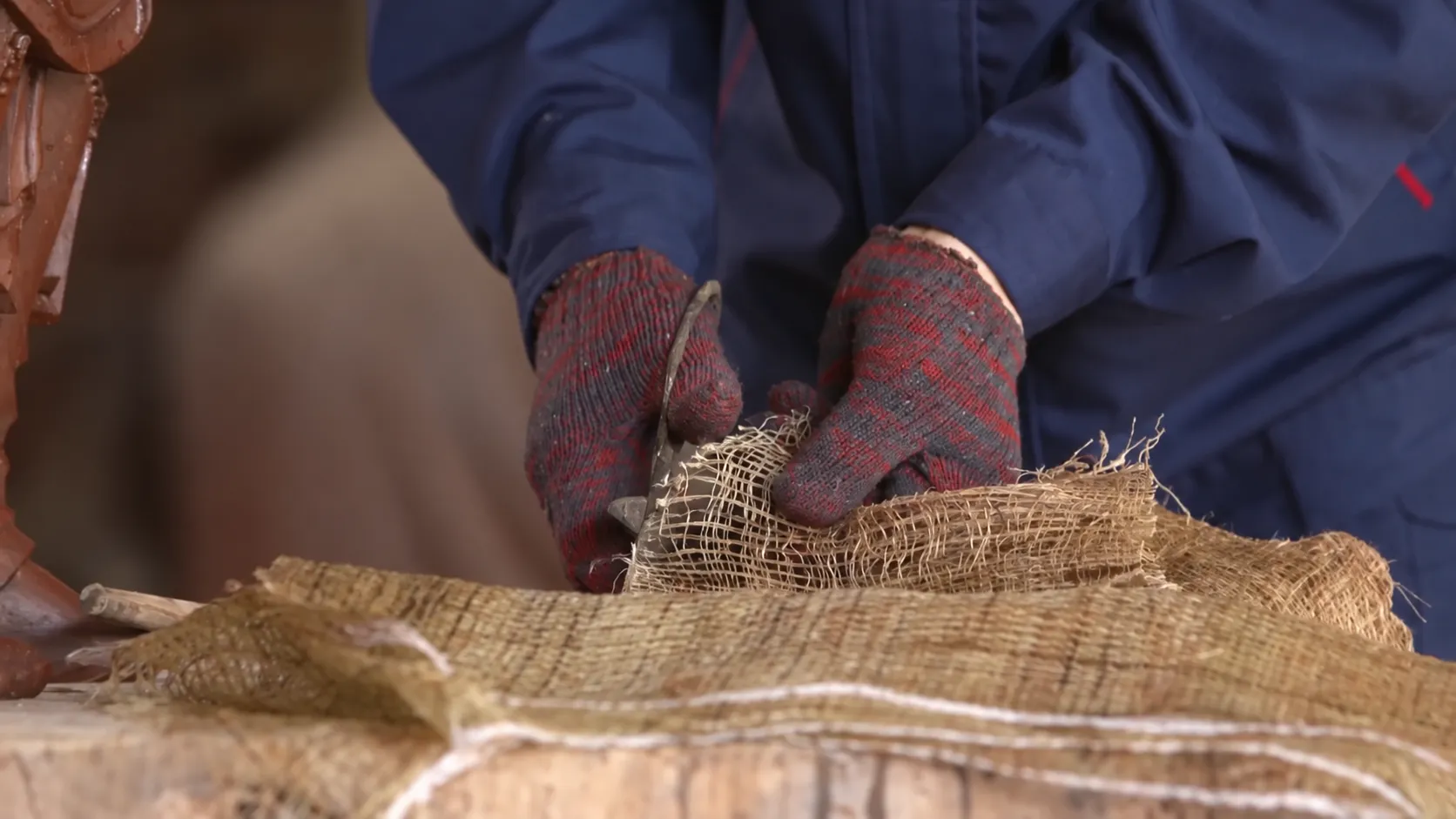
A technical study identified hemp in four early Chinese sculptures. The official Tiantai craft record specifies ramie. These terms describe different fibres.
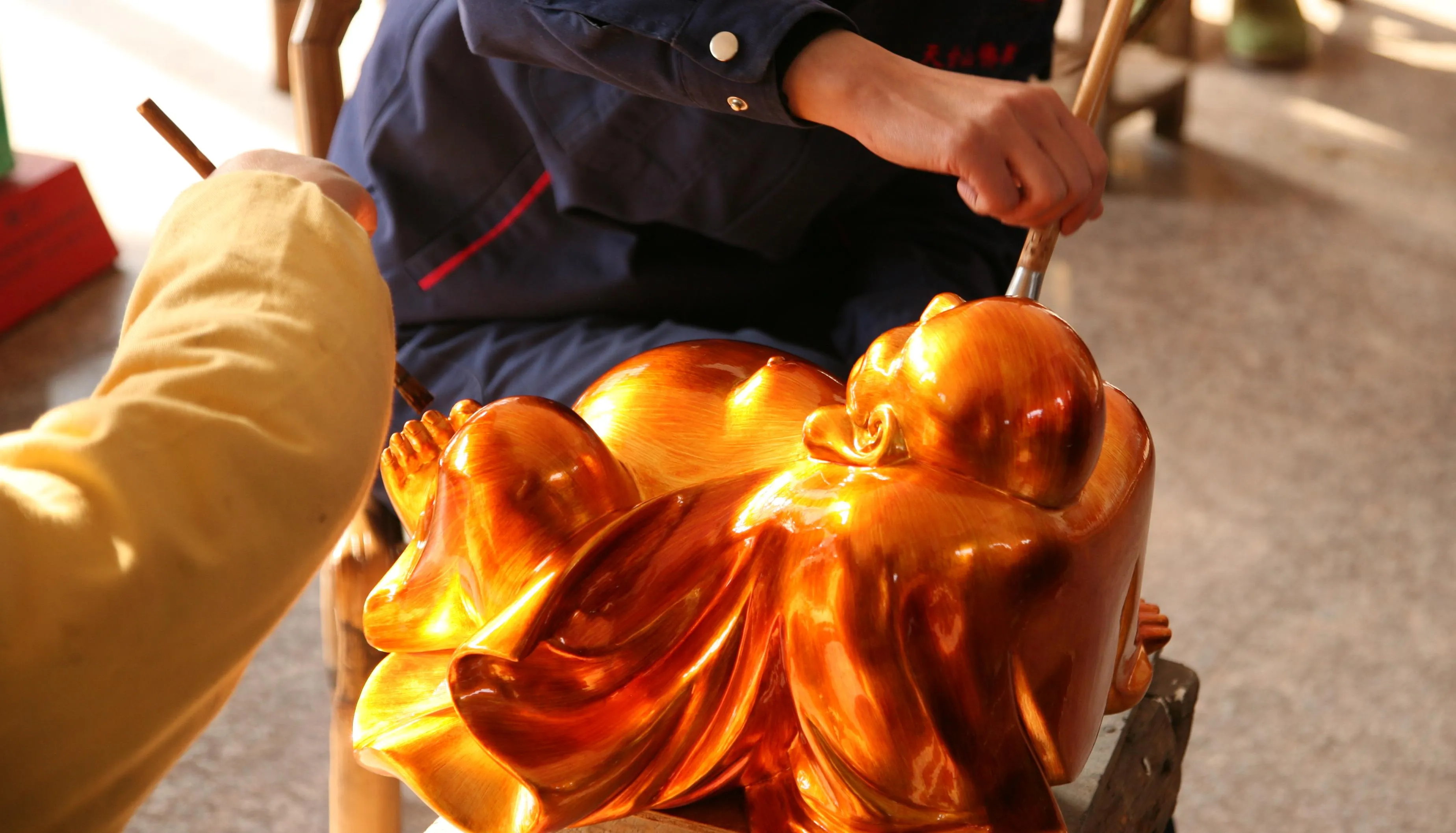
Fillers help shape and smooth a body. Recipes differ: examined early works contain bone filler; the Tiantai record describes mineral and tile powders.
Early sculpture: material analysis ↗Tiantai: official craft record ↗
Watch the materials take shape.
Playback is unavailable. Open the video file.
Playback is unavailable. Open the video file.
A schematic outline of hollow construction, grouped into five stages.
Establish the shape on a model.
Build up the body with cloth, lacquer and appropriate ground materials.
Remove the temporary model once the body is ready.
Adjust the modelling and smooth the surface.
Complete the surface with lacquer, colour or gilding as the work requires.
Procedures vary by workshop and period, so this is not a recipe for any particular sculpture. The official Tiantai record describes its own craft as 48 stages, from modelling through ground layers, ramie cloth, lacquer, polishing, vermilion and gilding. Read the source ↗