Historic Works
Look closely.
Four museum records offer a starting point. Each object has its own date, construction and conservation history.
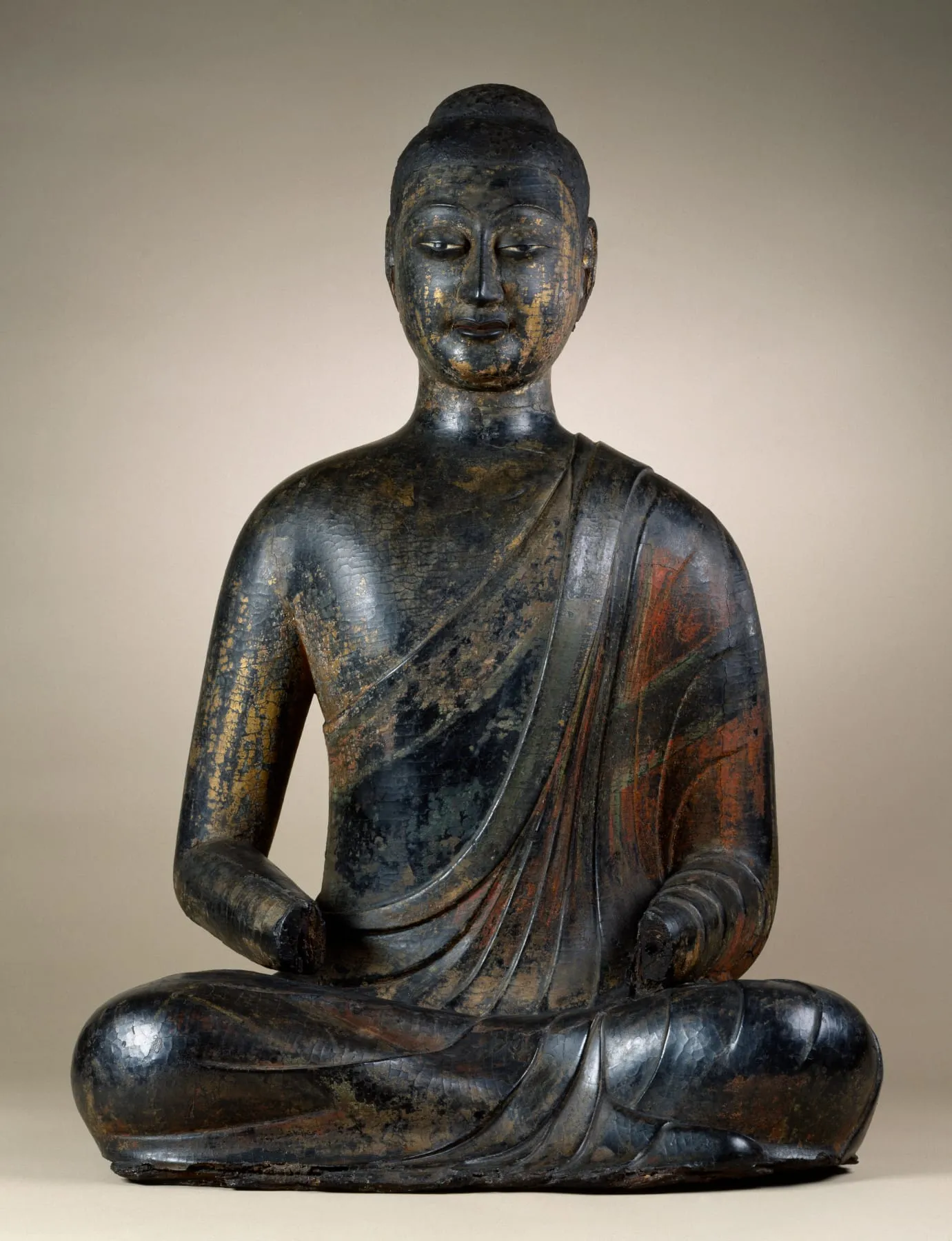
Walters Art Museum · 25.9
Buddha
- Date
- c. 590
- Material
- Lacquer, wood and paint
- Construction
- Retained wooden core
- Accession number
- 25.9
An assembled wooden core supports this early Chinese figure. Technical study helps explain the construction beneath the lacquer surface.
Object details
The museum describes a core assembled from twelve pieces of wood. This work is a useful counterpart to hollow examples, rather than a model for all dry-lacquer sculpture.
Related technical research ↗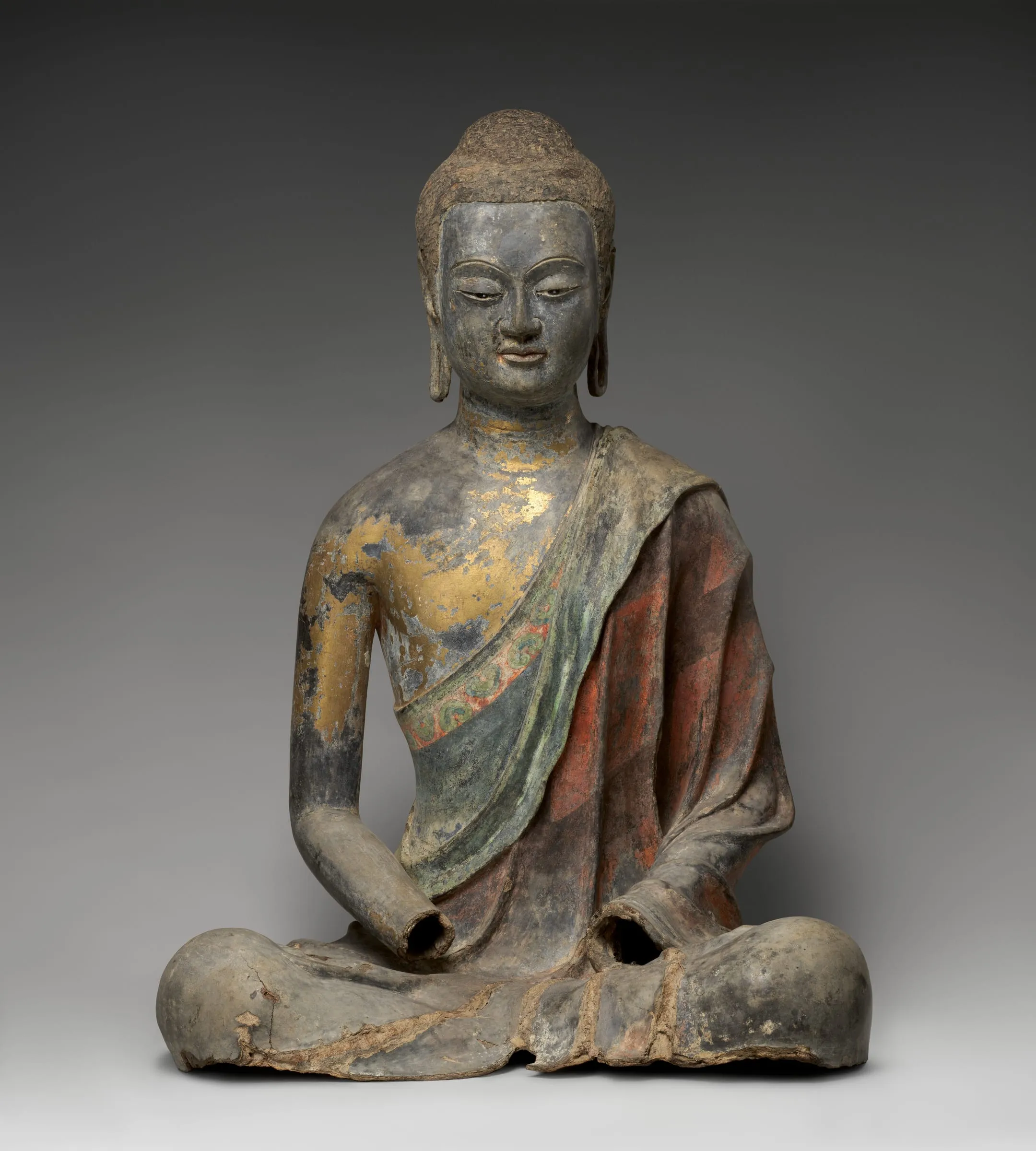
The Metropolitan Museum of Art · 19.186
Buddha, probably Amitabha
- Date
- Early 7th century
- Material
- Dry lacquer, polychromy and gilding
- Construction
- Hollow construction
- Accession number
- 19.186
This figure connects an early Tang museum record with scientific examination of its textile and lacquer construction.
Object details
The identification as Amitabha is probable, not certain. Material analysis of this and three other early Chinese sculptures identified hemp fibres; that finding should not be rewritten as ramie.
Related technical research ↗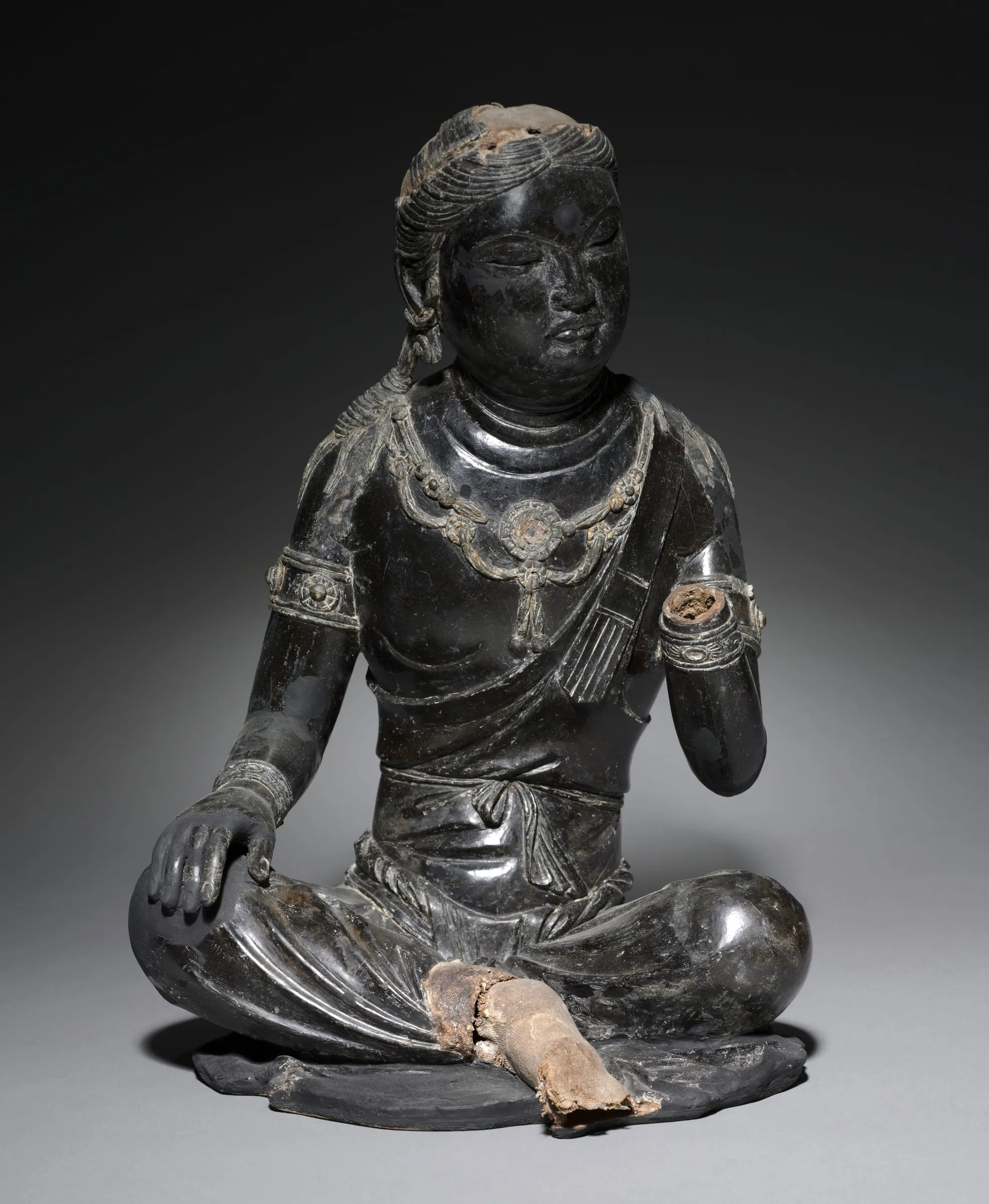
Cleveland Museum of Art · 1983.86
Bodhisattva
- Date
- 8th century · Tang dynasty
- Material
- Dry lacquer
- Construction
- Hollow construction
- Accession number
- 1983.86
Conservation work reveals how later surface treatments can change the appearance of a surviving sculpture.
Object details
The museum’s conservation account describes the removal of overpainting and the recovery of earlier surface decoration. This object is distinct from the privately owned bodhisattva head discussed in the Smithsonian technical study.
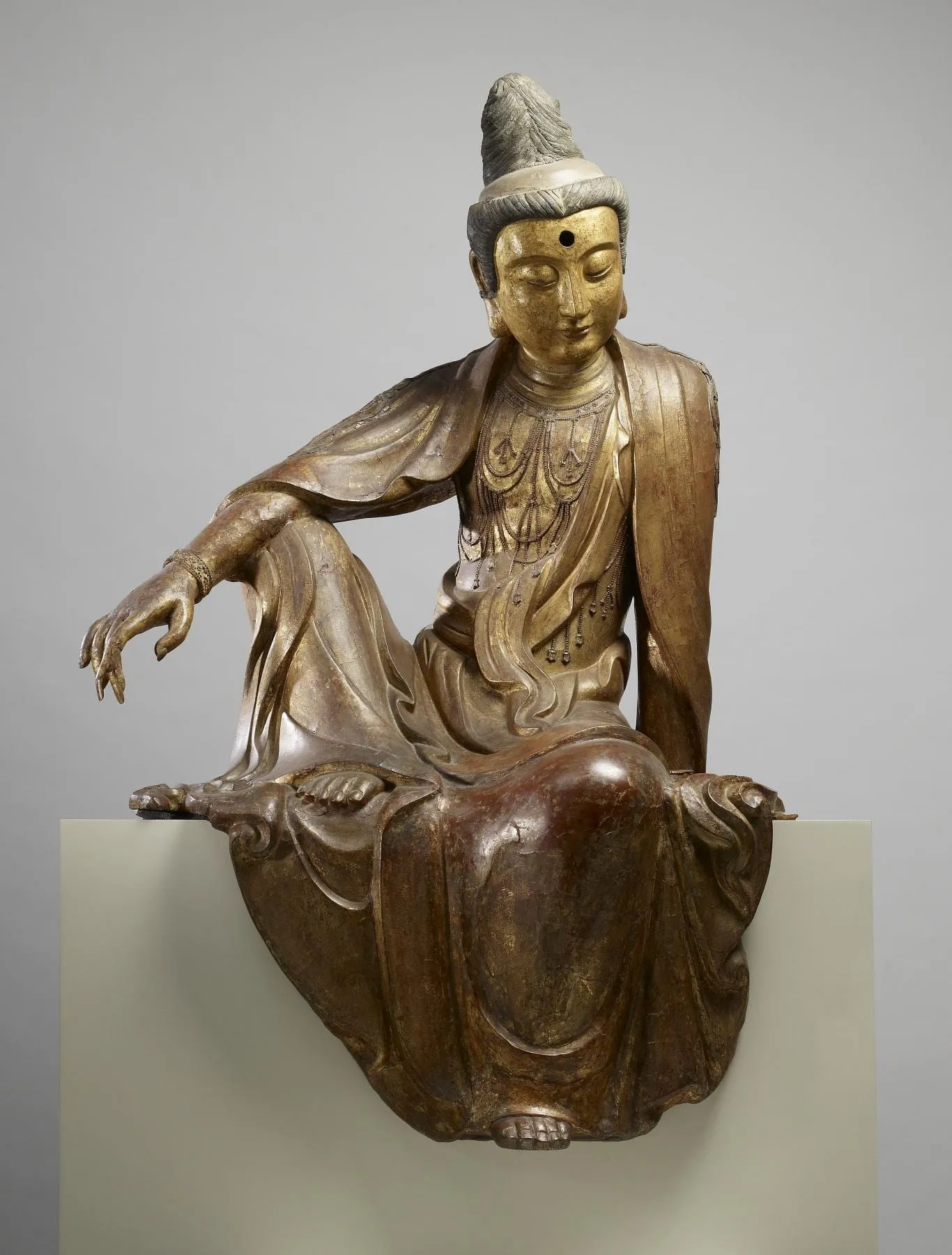
Walters Art Museum · 25.256
Bodhisattva Guanyin
- Date
- Late 14th–15th century
- Material
- Lacquer, cloth, paint and gold
- Construction
- Hollow construction
- Accession number
- 25.256
A seated Guanyin provides a later example of a hollow cloth-and-lacquer body, with a pose described as tranquil ease.
Object details
The present museum record dates this figure to the late fourteenth to fifteenth century. Its identity and date should be followed separately from older secondary descriptions.